
Among the many stories associated with Japanese sake brewing, one in particular continues to spark curiosity.
Some brewery workers are said to have remarkably soft hands despite spending years performing physically demanding work. While this observation occasionally appears in discussions about sake brewing, there is currently no scientific evidence showing that working in a sake brewery leads to softer skin or slower skin ageing.
Yet the story raises an interesting question. Why does this observation continue to surface, and is there anything in modern research that helps place it into context?
A Craft Built by Hand
Sake brewing has always been a hands-on craft.
Even in modern breweries, many stages of production require careful attention and direct interaction with rice, water, koji and fermentation tanks. Traditionally, brewery workers spend long hours handling steamed rice, monitoring fermentation and carrying out countless small tasks that influence the final quality of the sake.
Given the physical nature of the work, soft hands are not necessarily what most people would expect.
That contrast may be one reason why the observation has attracted attention over the years.
The Importance of Koji
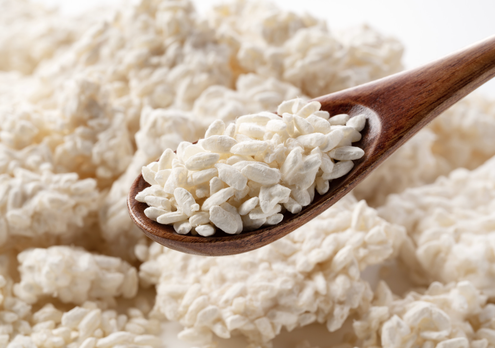
At the heart of sake brewing lies koji, a culture of Aspergillus oryzae grown on steamed rice.
Koji produces the enzymes that convert rice starch into sugars, allowing yeast fermentation to take place. Without it, sake would not exist.
For centuries, koji has been one of the defining elements of Japanese fermentation culture. It is also used in products such as miso, soy sauce and mirin, making it one of the most important microorganisms in Japanese cuisine.
Because of its unique properties, koji has increasingly become a subject of scientific research.
What Science Has Explored
While no study has demonstrated that sake brewers develop softer or younger-looking hands as a result of their work, researchers have investigated a range of compounds associated with rice fermentation and sake production.
One of the most interesting studies was published in Clinical, Cosmetic and Investigational Dermatology in 2022. Researchers examined the effects of consuming koji amazake, a traditional fermented rice beverage, in a randomized, double-blind, placebo-controlled trial involving healthy adults concerned about dry skin. After eight weeks, skin water content on the left cheek was maintained in the amazake group, while it declined in the placebo group. The study did not investigate sake brewers, hand appearance or topical exposure. It focused exclusively on the consumption of amazake and specific measurements related to skin hydration.
Researchers have also investigated sake kasu, the rice lees that remain after sake is pressed.
A 2025 study published in Food & Function examined an extract obtained from sake lees using a continuous phase-transition extraction method. The researchers analysed its composition and tested its effects in Caenorhabditis elegans, a laboratory organism frequently used in ageing research. They reported effects on lifespan, stress resistance and cellular defence pathways. The study did not investigate human skin, brewery workers or the topical use of sake lees, but it highlights the growing scientific interest in compounds derived from sake production.
More broadly, a 2025 review published in Cosmetics summarised research into biologically active compounds found in fermented rice products. The review discussed amino acids, peptides, organic acids and other fermentation-derived substances that have been investigated for potential applications relating to moisturisation, antioxidant activity and skin-barrier research, based on a mixture of laboratory, animal and limited human evidence.
Modern Fermentation Research
Beyond sake itself, researchers have increasingly investigated fermentation-derived ingredients used in skincare. One example is Galactomyces Ferment Filtrate (GFF), a yeast fermentation ingredient commonly used in cosmetic formulations. Experimental research in human keratinocytes has examined its effects on biological pathways involved in skin barrier maintenance, including AHR signalling, filaggrin expression and NRF2-related antioxidant responses. These findings concern laboratory cell models rather than human clinical outcomes, but they illustrate the broader scientific interest in fermentation-derived ingredients.
Importantly, the studies discussed here concern different fermented rice preparations, isolated extracts or laboratory ingredients. They should not be interpreted as evidence that drinking sake, handling brewing materials or working in a sake brewery improves skin health.
None of these studies explain the story of sake brewers' soft hands.
What they do show is that ingredients associated with rice fermentation continue to attract scientific attention far beyond the world of food and beverages.
Observation and Evidence
It is often tempting to draw a direct line between traditional observations and modern research. In reality, things are rarely that simple.
At present, there is no scientific evidence showing that working in a sake brewery leads to softer skin or slower skin ageing. Likewise, studies on amazake consumption, sake-derived ingredients or fermentation extracts should not be interpreted as proof of the observation.
The observation and the science therefore remain separate.
One is a story occasionally encountered within the sake world. The other is a growing body of research exploring the biological properties of fermentation-derived compounds. The research provides an interesting scientific context, but it does not explain the observation itself.
Why the Story Endures
Perhaps the enduring appeal of the story lies in the fact that it reflects something fundamental about sake itself.
Sake brewing sits at the intersection of tradition, craftsmanship and science. Brewers have spent centuries working with fermentation long before modern laboratories existed. Through observation and experience, they developed knowledge that is still valued today.
Modern researchers, meanwhile, continue to explore many of the same ingredients and processes from a scientific perspective.
Whether future research will shed additional light on observations associated with sake brewing remains to be seen.
For now, the story of sake brewers' soft hands remains exactly what makes it so interesting: a curious observation, a touch of folklore and a reminder that even after centuries of brewing history, sake still has the ability to surprise us.
References
Enomoto, T., Kojima-Nakamura, A., Kodaira, K., & Kurahashi, A. (2022).
Koji amazake Maintains Water Content in the Left Cheek Skin of Healthy Adults: A Randomized, Double-Blind, Placebo-Controlled, Parallel-Group Comparative Trial.
Clinical, Cosmetic and Investigational Dermatology, 15, 1283–1291.
Zou, X., Xiao, Y., Ke, L., Nie, Y., Xiao, J., Yang, J., Guo, C., & Liu, X. (2025).
Sake lees extract obtained using a novel continuous phase-transition extraction method: evaluation of its bioactive composition, anti-aging efficacy and mechanism.
Food & Function, 16, 3862–3878.
Yang, F., Hu, Y., Wu, M., Guo, M., & Wang, H. (2025).
Biologically Active Components and Skincare Benefits of Rice Fermentation Products: A Review.
Cosmetics, 12(1), 29.
Yan, X. et al. (2022).
Galactomyces Ferment Filtrate Potentiates an Anti-Inflammaging System in Keratinocytes.
Journal of Clinical Medicine, 11(21), 6338.