
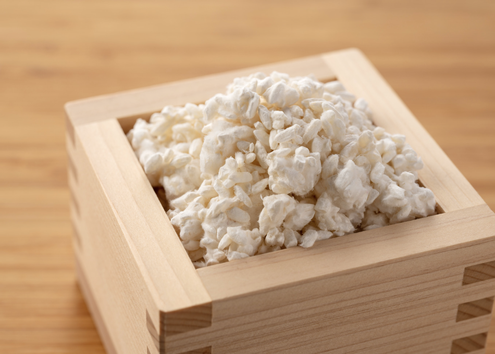
The microorganism that makes sake possible, and shapes how it tastes. Koji is rarely visible, yet it defines everything about sake.
Anyone who spends time around sake will eventually come across the term. It appears in explanations, in tastings, in conversations with producers. Usually it is mentioned briefly, sometimes described as a mold, sometimes as a fermentation starter.
And then the conversation moves on.
What gets lost in the process is its actual significance. Because koji is not just a component of sake. It is the reason sake is possible in the first place. Sake cannot exist without koji.
Unlike wine or beer, sake does not begin with sugar.
Wine is based on grapes, beer on malted grain. In both cases, sugar is already present or made accessible through malting. Yeast can begin its work immediately. Rice works differently. It contains starch, but no fermentable sugar. Without an intermediate step, nothing happens. No fermentation, no alcohol, no sake. This is where koji comes in.
The mold Aspergillus oryzae is cultivated on steamed rice, where it produces enzymes that convert starch into sugar.
Only then can fermentation begin.
Without koji, there is no sugar.
Without sugar, no fermentation.
Without fermentation, no sake.
It is that simple.
Koji does more than create sugar
The technical explanation is important, but it is incomplete. Koji does not just make sake possible. It also shapes how it tastes. As it breaks down starch, it produces not only sugars but also amino acids and other compounds. These are the foundation of umami, depth, and texture.
This means koji is not a neutral tool. It actively defines the character of sake.
How it is cultivated, how intensely it develops, how long it is allowed to work, all of this influences the final result. Koji is not just a process step.
It is a design element. The invisible part of flavor
When sake is discussed, the focus is often on categories, polishing ratios, or regions. Junmai, Ginjo, Daiginjo. 50 percent polishing. Cool fermentation versus traditional methods.
All of this matters. But it describes only the surface. Koji tends to remain in the background, even though it is one of the most decisive factors. Perhaps precisely because it is harder to grasp. You do not see it in the finished product. You cannot isolate it on the palate. And yet, it is everywhere.
Why koji is rarely the focus
Part of the issue lies in how sake is communicated. Koji is difficult to explain without becoming technical. And once things become technical, many people lose interest. So it is simplified or skipped altogether. Another reason is cultural. In Japan, koji is deeply embedded. Not just in sake, but in miso, soy sauce, and many other products. It is part of the system and does not need constant explanation. In Europe, that context is missing. This fragmented understanding is also reflected in how unevenly sake develops across European markets, where consumption, positioning, and interpretation vary significantly from country to country.
Rethinking koji
This is where a shift in perspective begins. Koji does not need to be treated as specialized knowledge. It can be understood as what it really is. A central element of flavor. You do not need to understand every technical detail to appreciate sake. But recognizing that koji is more than a background process changes how you experience it. The focus moves away from categories and origin. Towards structure, depth, and balance.
Beyond sake
Koji is not limited to sake. It connects an entire category of foods built on similar principles. Sake, miso, soy sauce, and increasingly, modern culinary applications where koji is used deliberately to develop flavor.This makes it both traditional and contemporary. As fermentation continues to gain global attention, koji is slowly moving into focus. Not as a trend, but as a foundation of what many people describe as a new understanding of taste.
Why this matters
In the end, it is not about understanding koji in every detail. It is about recognizing that sake does not follow the same logic as other alcoholic drinks. It is built on a different principle. And that principle begins with koji. Once you understand that, sake starts to make more sense. Not in a more complicated way. But in a clearer one.
-----------
German version
-------
Koji: Die unsichtbare Grundlage von Sake - Der Mikroorganismus, der Sake überhaupt möglich macht und seinen Geschmack prägt.
Koji ist eines dieser Dinge, von denen fast jeder schon gehört hat, aber kaum jemand wirklich versteht.
Wer sich mit Sake beschäftigt, stößt früher oder später auf den Begriff. Er taucht in Erklärungen auf, in Verkostungen und in Gesprächen mit Produzenten. Meist wird er nur kurz erwähnt, manchmal als Schimmelpilz, manchmal als Fermentationsstarter.
Was dabei verloren geht, ist seine eigentliche Bedeutung. Denn Koji ist nicht einfach ein Bestandteil von Sake. Er ist der Grund, warum Sake überhaupt existieren kann.
Sake ohne Koji ist nicht möglich
Im Gegensatz zu Wein oder Bier beginnt Sake nicht mit Zucker. Wein basiert auf Trauben, Bier auf gemälzter Gerste. In beiden Fällen ist Zucker bereits vorhanden oder wird durch Keimung verfügbar gemacht. Die Hefe kann sofort arbeiten. Reis funktioniert anders. Er enthält Stärke, aber keinen Zucker, den Hefe direkt verarbeiten kann. Ohne einen Zwischenschritt passiert nichts. Keine Gärung, kein Alkohol, kein Sake.
Genau hier kommt Koji ins Spiel.
Der Pilz Aspergillus oryzae wird auf gedämpften Reis kultiviert und produziert Enzyme, die die Stärke in Zucker umwandeln. Erst dadurch entsteht die Grundlage für die Gärung.
Ohne Koji gibt es keinen Zucker.
Ohne Zucker keine Fermentation.
Ohne Fermentation keinen Sake.
So einfach ist das.
Koji macht mehr als nur Zucker
Die technische Erklärung ist wichtig, aber sie greift zu kurz. Koji sorgt nicht nur dafür, dass Sake überhaupt entsteht. Er prägt auch, wie er schmeckt. Während er Stärke abbaut, entstehen neben Zucker auch Aminosäuren und andere Verbindungen. Sie bilden die Grundlage für Umami, Tiefe und Textur. Koji ist also kein neutraler Helfer. Er gestaltet den Charakter von Sake aktiv mit. Wie er geführt wird, wie intensiv er arbeitet und wie viel Zeit er bekommt, beeinflusst das Ergebnis entscheidend. Koji ist kein bloßer Prozessschritt. Er ist ein Gestaltungselement.
Der unsichtbare Teil des Geschmacks
Wenn über Sake gesprochen wird, geht es oft um Kategorien, Poliergrade oder Regionen. Junmai, Ginjo, Daiginjo. 50 Prozent Politur. Kühle oder traditionelle Vergärung. All das ist relevant. Aber es beschreibt nur die Oberfläche.Koji bleibt dabei oft im Hintergrund, obwohl er einer der wichtigsten Einflussfaktoren ist. Vielleicht gerade deshalb, weil er schwer greifbar ist.
Man sieht ihn nicht im fertigen Produkt. Man schmeckt ihn nicht isoliert. Und doch ist er überall.
Warum Koji so selten im Fokus steht
Ein Teil des Problems liegt in der Kommunikation. Koji ist schwer zu erklären, ohne technisch zu werden. Und sobald es technisch wird, verlieren viele das Interesse. Deshalb wird er vereinfacht oder ganz ausgelassen. Ein anderer Grund ist kulturell. In Japan ist Koji tief verankert. Nicht nur in Sake, sondern auch in Miso, Sojasauce und vielen anderen Produkten. Er gehört zum System und muss nicht ständig erklärt werden. In Europa fehlt dieser Kontext. Deshalb wird Koji oft als etwas Exotisches dargestellt, statt als das, was er wirklich ist. Eine Grundlage.
Koji neu denken
Hier beginnt ein Perspektivwechsel. Koji muss nicht als Spezialwissen behandelt werden. Er lässt sich als das verstehen, was er ist. Ein zentraler Bestandteil von Geschmack. Man muss nicht jedes Detail kennen, um Sake zu verstehen. Aber zu erkennen, dass Koji mehr ist als ein Hintergrundprozess, verändert die Wahrnehmung. Der Fokus verschiebt sich. Weg von Kategorien und Herkunft. Hin zu Struktur, Tiefe und Balance.
Mehr als nur Sake
Koji ist kein isoliertes Phänomen. Er verbindet eine ganze Welt von Lebensmitteln, die nach ähnlichen Prinzipien entstehen. Sake, Miso, Sojasauce und zunehmend auch moderne Anwendungen in der Küche. Das macht ihn gleichzeitig traditionell und zeitgemäß. Während Fermentation weltweit an Bedeutung gewinnt, rückt auch Koji stärker in den Fokus. Nicht als kurzfristiger Trend, sondern als Grundlage eines neuen Verständnisses von Geschmack.
Warum das wichtig ist
Am Ende geht es nicht darum, Koji bis ins Detail zu verstehen. Es geht darum zu erkennen, dass Sake nicht nach den gleichen Prinzipien funktioniert wie andere alkoholische Getränke. Er basiert auf einem anderen Ansatz. Und dieser beginnt mit Koji. Wer das einmal verstanden hat, sieht Sake anders. Nicht komplizierter. Sondern klarer.
Bastian
Go-Sake